Your buyers message at 11 p.m. Here's how to answer at 11:01.

A buyer messages at 11p.m. about a listing. By morning, they’ve already toured it with another agent.
That gap, between when the lead arrives and when you respond, is where most real estate business is lost. You can’t be on call around the clock. But your marketing system can be.
This guide walks through how to build an automated real estate marketing engine that captures leads, responds instantly, and keeps prospects warm, whether you’re at a showing, in a meeting, or off the clock.
The real reason leads go cold between 9 p.m. and 9 a.m.
It’s not uncommon for a real estate lead journey to start with a late-night website visit or a rushed inquiry from a listing site.
But leads don’t always arrive during business hours and if agents don’t respond quickly, that lead moves on.Even when agents do reply, manual follow-up can be inconsistent and unqualified leads can eat up hours that should go to serious buyers or sellers.
These are some of the most common leak points in the traditional real estate marketing funnel:
- Late-night or weekend lead submissions: Many leads come in after hours, meaning agents can’t respond instantly.
- Unqualified leads draining time: Without a system, agents spend too much time on tire-kickers.
- No systematic follow-up: Manual reminders and emails get missed, leading to cold leads.
- Missed reminders and deadlines: Important, admin-heavy tasks, like following up after a showing, are forgotten.
An automated real estate marketing system addresses each of these leak points by capturing leads the moment they engage, qualifying them based on behavior, and following up consistently—no matter the hour. Instead of juggling spreadsheets, emails, and calendars, agents can rely on automation to handle repetitive tasks and keep every lead moving through the pipeline. Solutions like ActiveCampaign combine CRM, multi-channel messaging, and workflow automation in a single system to ensure agents never let an opportunity slip through the cracks.
Build the 24/7 engine, one automation at a time
In this section, we’ll break down how real estate agents can build a fully automated system that captures leads instantly and keeps them moving through the pipeline. You’ll see exactly how ActiveCampaign features, along with pre-built automation recipes and multi-channel messaging, work together to create a 24/7 capture-to-close engine.
1. Capture every inquiry
The faster leads enter your pipeline, the higher the chance of conversion—relying on manual intake or scattered spreadsheets risks delays and lost opportunities.
Here’s how you can use ActiveCampaign’s tools to capture every inquiry automatically:
- Set up landing pages and forms to collect inquiries at any time—whether that’s a late night website visit, a weekend question, or an RSVP at an open house.
- Use tags and lists to automatically organize leads by type, stage, or origin. This will form the foundational data for an organized, actionable system that keeps every prospect moving efficiently through the pipeline.
For example, you might create a “Get Your Home Value” landing page that captures seller leads and automatically tags them as prospect-seller in your CRM.
For buyers, set up floating listing alert forms so buyers can opt-in to receive automatic new listing notifications any time a property becomes available in their preferred neighborhoods. Set up this form to tag the contact with prospect-buyer and add them to an email marketing list for notifications on new properties.
Try our pre-built automation recipe to kickstart listing notifications in a few clicks.
ActiveCampaign is a no-code platform with visual builders for most tools, so it’s easy to get set up. Ready-made form templates are available, or you can simply describe what you need to ActiveCampaign’s AI engine, Active Intelligence, and watch AI create your idea for you.
2. Respond instantly across channels
Buyers and sellers often reach out outside normal business hours, and delays in follow-up can cause interest to fade. With ActiveCampaign, you can create automated multi-channel responses so prospects receive an acknowledgement within seconds, even when you’re at a showing or offline.
Use the AI Automation Builder to create sequences that automatically send messages based on lead type or behavior whenever a lead submits a form. Short, targeted sequences can keep conversations alive until you can personally engage. Try using this real estate prospect drip automation to quickly set up a message sequence that will move your leads through the first few steps of interest.
ActiveCampaign offers native functionality for email, SMS, and WhatsApp messages, so that you can reach prospects wherever is most convenient.
For example, you might set up an instant SMS confirmation for an open house RSVP, paired with a follow-up email that includes event details and a calendar link.
For a seller requesting a home valuation, you could trigger an email with a CMA guide and home prep tips, followed by a reminder SMS a few days later to encourage scheduling an appointment.
Remember to include after-hours logic so inquiries coming in late at night or on weekends receive acknowledgement of the inquiry. For example:
- Send an automated text or email that thanks the prospect for their inquiry and indicates the hours when you’ll personally respond.
- Trigger a follow-up email the next morning or the next business day with more detailed information or next steps.
This system means prospects always get a timely response, reducing the risk of losing leads to faster competitors.
3. Qualify and route leads automatically
Not all leads represent equal interest, and manually sorting through inquiries can waste valuable time. ActiveCampaign allows agents to automate lead scoring and routing, so you spend your energy on prospects who are most likely to convert.
Implement site tracking to understand how prospects behave when viewing your site and create contact scoring rules to prioritize leads that show signs they are ready to act:
- A serious potential buyer is likely to view multiple listings and request a showing or book an open house. They might also download resources like homebuying guides from your site.
- Sellers who are ready to act may request a valuation or upload property details.
Then, set up lead routing to automatically assign leads to the right agent based on type, value, or region. For instance:
- Route luxury property inquiries to an agent specialized in high-end listings.
- Direct investor leads to a designated team member who handles investment properties.
Sync ActiveCampaign CRM to your calendar to keep your appointments up-to-date with bookings. Or use the Calendly integration to update a prospect’s stage when they make an appointment.
Try these other automation recipes that help activate workflows to stay on top of hot leads:
- Instantly notify your team when a lead shows interest by setting up Slack notifications.
- Create a deal and task when a contact is interested in a property to follow opportunities in your CRM.
- Nurture new seller leads with a seller onboarding flow, including prebuilt welcome sequences, checklists, and next steps.
- Automatically follow up with open house attendees to convert interest into appointments.
By qualifying and routing leads automatically, agents can focus on the hottest opportunities and turn them into an actionable pipeline.
4. Communicate like a real person (even when messages are automated)
Buying or selling real estate is a deeply personal decision. Prospects may be making one of the biggest decisions of their lives, so they expect communication that feels human. With the right tools, you can scale personalized communication without adding more manual work.
Here’s how you can use ActiveCampaign to personalize communication—even inside automated workflows:
- Use dynamic content to tailor messages based on lead type, location, or stage in the journey. A single email can display different content for buyers vs. sellers, or highlight listings and insights specific to a prospect’s neighborhood.
- Create tags and lists that adjust messaging based on site activity, so prospects receive content that reflects what they’ve already shown interest in.
- Use predictive sending to make sure emails are delivered at the time each individual contact is most likely to open and reply, maximizing engagement without manually timing sends.
- Vary your messaging channels based on the purpose of the message. For example, use SMS or WhatsApp for time-sensitive communication where speed matters more than polish.
With these tactics, agents can stay consistent without sounding robotic. Communication feels one-to-one, even when it’s powered by workflows running quietly in the background.
5. Connect your stack and report on what works
Time is a real estate agent’s most limited resource, so it’s not realistic for most to spend hours sifting through analytics.
Active Intelligence’s AI reporting provides instant insights from basic questions, quickly uncovering trends, spotting drop-off points, or identifying specific opportunities to improve your campaigns. This makes data-driven decisions accessible even for agents short on time.
Try asking questions like:
- Which lead sources generate the most appointments?
- Which campaigns bring in the highest-quality seller leads?
- Where are seller leads dropping off?
- How quickly are new leads being contacted?
- What times of day generate the most responsive leads?
- How many buyer leads turn into offers?
- Are open house follow-ups converting better than listing alerts?
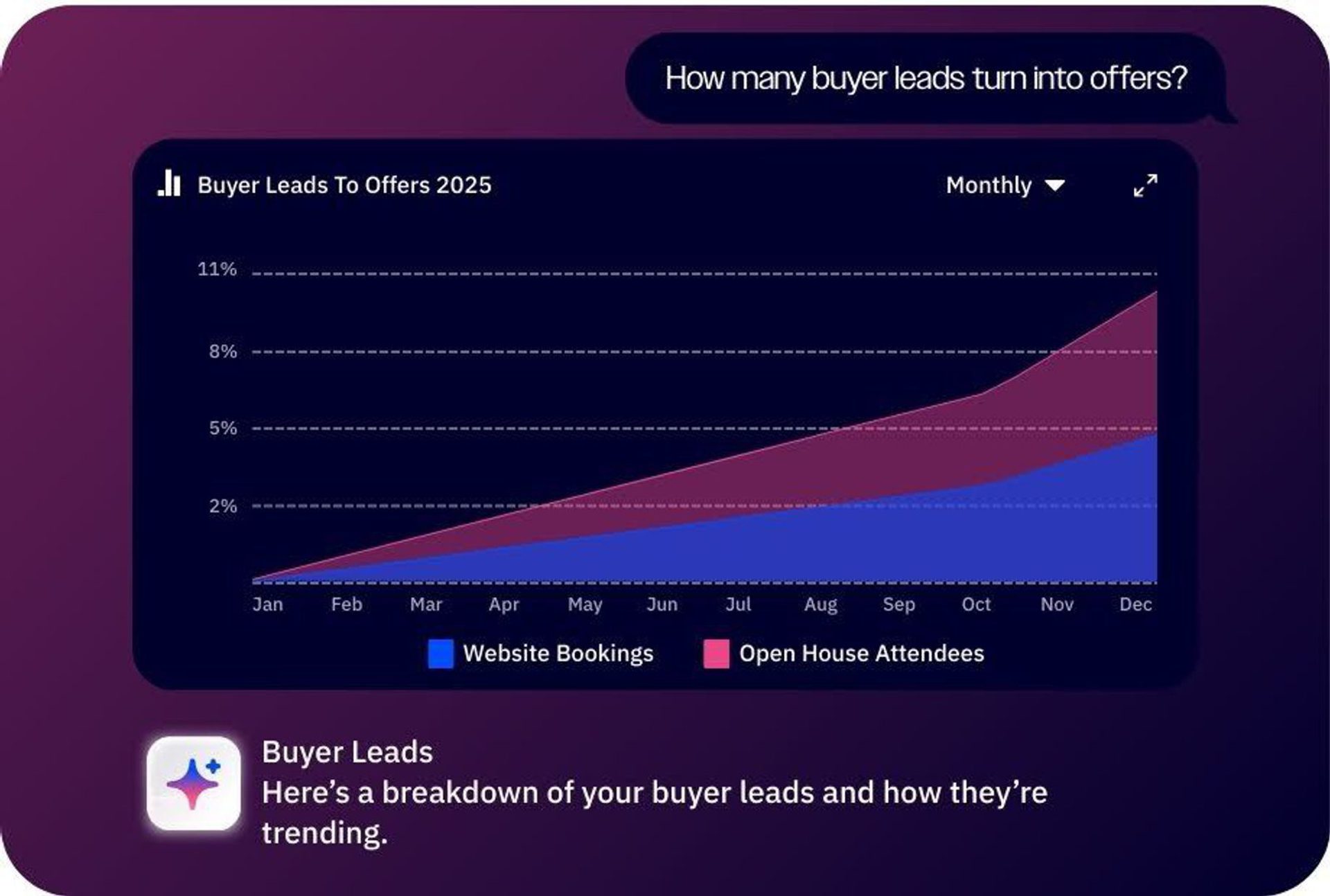
Once Active Intelligence has analyzed your performance, it will follow up with recommended optimizations, doubling down on high-performing channels and fixing holes in your funnel.
The before-and-after: real estate marketing with a follow-up engine
Real estate never really sleeps, but agents certainly can.
Here’s what that looks like in practice. It’s Sunday morning. An out-of-town buyer submits a showing request at 7 a.m. Before you’ve had coffee, they’ve received a confirmation text, a neighborhood guide, and a calendar link to book time with you. Your CRM has tagged them as high-intent, created a deal, and queued a follow-up for Monday. By the time you check your phone, the appointment is already on your calendar.
That’s the system working. Not you.
ActiveCampaign combines lead capture, automated follow-up, lead scoring, and multi-channel messaging in one platform — so every inquiry gets a response, every hot lead gets prioritized, and nothing falls through the cracks between a Friday afternoon and a Monday morning.
Ready to build your own 24/7 real estate marketing engine? Start a free trial with ActiveCampaign to see how easily we’ll take your clients from curiosity to close-of-sale.
Real Estate Marketing FAQs
What types of marketing campaigns are best for real estate?
The most effective real estate marketing campaigns combine a variety of digital channels with automated follow-up and nurturing tailored to buyer or seller needs. Common campaign examples include listing launches, open house invitations, property alerts, and valuation requests. Multi-channel campaigns using email, SMS, and social messaging often drive the highest engagement.
How can real estate agents generate more leads online?
Real estate agents can generate more online leads by creating high-converting landing pages, offering downloadable guides or valuation tools, and using targeted ads on social media or search engines. Capturing inquiries through forms and automating follow-up ensures prospects don’t slip through the cracks. Consistently sharing helpful content also builds trust and encourages inbound leads.
What is a real estate marketing automation system?
A real estate marketing automation system automatically captures, segments, nurtures, and tracks leads throughout the buyer or seller journey. It can trigger emails, SMS, or tasks based on prospect behavior, saving agents time while keeping leads engaged. This enables a consistent, personalized follow-up engine without manual effort.
What metrics should real estate agents track for marketing success?
Key metrics include lead source quality, speed-to-lead, appointment conversion rates, and the number of leads that progress through the pipeline to closed deals. Monitoring engagement with emails, SMS, and landing pages helps refine campaigns. Tracking these metrics allows agents to prioritize high-value leads and optimize marketing efforts.
What content should real estate agents share to attract buyers and sellers?
The most valuable real estate content includes neighborhood guides, market updates, home valuation tools, tips for staging or buying, and new listing alerts. Personalized emails or SMS based on lead type and behavior increase engagement. Sharing consistent, value-driven content builds trust and positions agents as local experts.
Resources to replicate these real estate workflows.

