
When OpenAI launched ChatGPT Agents in July, it described a system that could “do work for you using its own computer, handling complex tasks from start to finish.” Generating recurring reports. Rearranging meetings. Booking team offsites. The work, in other words, of a virtual assistant.
Jess Tyson’s reaction was somewhere between unease and genuine curiosity. As CEO of Don’t Panic Management, where she has spent 12 years building and running a VA business, she’s weathered plenty of technology shifts. This one felt different in scale, but not in kind.
Her conclusion: AI doesn’t make skilled VAs easier to replace. Used right, it makes them harder to replace. Here’s what marketers can learn from how her team actually does it.
The rapid adoption of AI over the past few years has been exciting, but has also instilled a not-so-unrealistic level of worry for those whose job tasks AI can seemingly handle.
You’ve been using AI for years. You just called it autocomplete.
Jess can’t pinpoint the first time she really took notice of AI, because the truth is, she’d been using it for years without thinking of it that way. Predictive text in Google. Grammarly. Siri. “It was helping us when we needed it, but we weren’t actively seeking ways to use it,” she says. “It wasn’t that I didn’t realize it was AI, but I didn’t really think about it as something that was particularly impacting us in any meaningful way. It was helping us when we needed it, but we weren’t actively seeking ways to use it.”
The distinction worth naming: AI inside a familiar tool feels invisible. AI as the tool, the thing you open intentionally and direct, is a different relationship entirely. The second kind is what’s changed, and it’s what requires a different skill set to use well.
So that’s the good news: you’re already doing this. Now it’s time to be deliberate about it.
Why clients still pay humans when ChatGPT is free
While AI was a natural part of Jess’ tech stack and workflow prior to ChatGPT’s launch in 2022, it has certainly become difficult to ignore as it has become so much more prevalent in tools the DPM team already used, let alone all the new tools that have since been introduced.
“That’s when we realized we needed to be able to answer questions when clients came to us wondering why they should hire us instead of just using ChatGPT,” Jess shares.
This is probably a question you’ve asked yourself, or maybe even been asked by a client or company leadership when it comes to marketing strategies and tactics.
“It’s obvious to me, but we had to be able to explain to prospective clients how we’re using the tools to help us be more productive. At this point, we do not believe AI can replace us,” Jess says.
Like many, Jess approaches AI with a healthy dose of realism: AI offers fantastic tools that can help VAs and marketers be way more effective and productive but it’s not a magic wand, and requires a careful human eye to reach its fullest potential.
And when it comes to new advances like ChatGPT Agents, Jess says, “It’s both scary and exciting to see this. I think it was a natural progression for someone to take, leading AI to be more proactive rather than reactive.”
But still, Jess cautions that marketers and assistants remember the true value — the human touch — they bring to a company or client: creativity and critical thinking.
“That’s what scares me a little bit, is some people who are truly going all in are turning a part of their brain off and assuming that AI is going to take over for them. It’s not — it’s just not there yet, and it might be eventually, but it’s our job as assistants, entrepreneurs, and marketers to use our critical thinking and to be more discerning than ever,” she says.
And that basically boils down Jess’s take on AI: It’s an incredibly helpful set of tools when paired with a smart human at the helm directing it.
“We needed to be able to answer questions when clients came to us wondering why they should hire us instead of just using ChatGPT.”
AI makes you better, not replaceable.
Our bi-weekly Autonomous Marketer newsletter shows you exactly how to amplify your skills with AI. Delivered right to your inbox every other week, no fluff.
Inside the DPM playbook: Imagine, activate, and validate
Here are the various ways Jess and her team use AI to impress clients, be more productive, and create more room for creativity. Many of these clever use cases also apply to busy marketers looking to save time completing research, writing, and more.
Phase I. AI as your ideas partner, not your ghostwriter
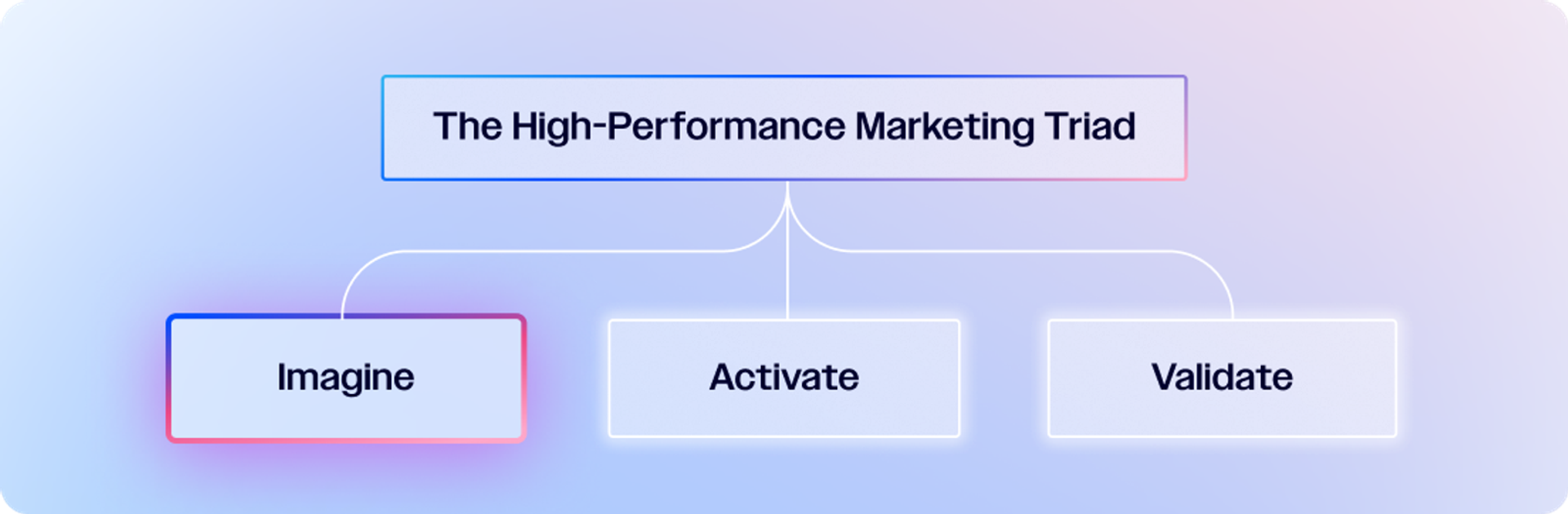
Here’s how Jess and her team use AI during the ideation and discovery phase, plus how marketers can apply the same approach.
Content ideation: Instead of starting with a blank page, Jess prompts AI to generate a list of topic ideas first. “As AI became more popular, we decided we wanted to start writing more blog posts on the topic for the DPM website. I used AI to help me generate a list of ideas to write about,” she explains.
NotebookLM: When onboarding a new client, the team feeds relevant documents into Google’s NotebookLM to distill complex information quickly. “It helps us understand big ideas when starting with a new client or beginning a new project,” Jess says.
Canva AI: For design work, the team uses Canva’s built-in AI to accelerate the start of new creative projects. “Canva’s AI has been great to help us start new projects for blog graphics, event invites, and social media graphics,” she notes, along with Squarespace AI for website building.
Descript: For podcast content, Descript does the work of identifying the most valuable moments automatically. “It helps us create social media clips from the most important elements of podcast recordings, including captions, as well as transcripts and highlight reels,” Jess says.
Phase 2: Turning ideas into timelines, tasks, and tight copy
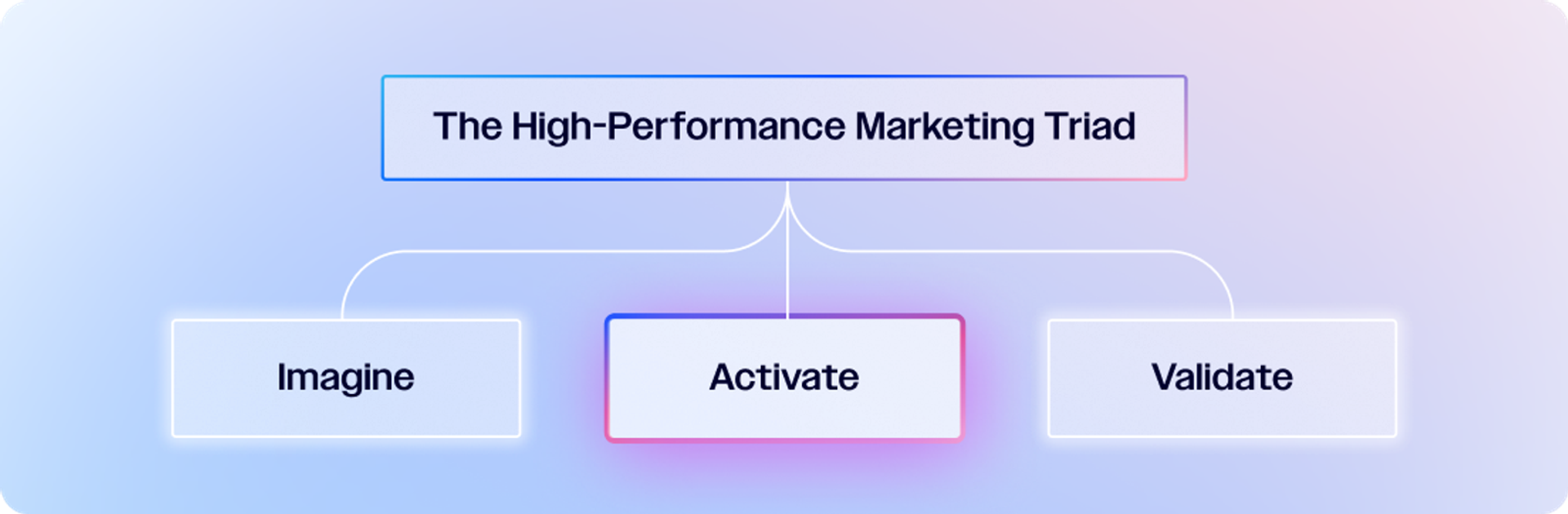
Once the ideas exist, this is where AI earns its keep on execution.
Asana: The team uses Asana’s built-in AI to build out project skeletons without manual planning. “You’re able to say, ‘I have this media campaign I’m working on. I need the first ad to go out on this date. Can you help me create a project timeline and help me set up subtasks and due dates?’ It’s so great for creating the skeleton of a project and for timeline generation,” Jess explains.
ClickUp Standup: For weekly team meetings, ClickUp’s Standup feature generates an automatic summary of completed work. “It will summarize what you worked on over the last seven days, which is useful during team meetings as we go over what we got done and what we need to focus on next,” she says. The summary is written, with clickable links to the relevant projects and tasks.
ChatGPT for research: When a task requires step-by-step instructions the team hasn’t done before, ChatGPT replaces the research process. “Just the other day, someone asked me to set up a Zap to put an email address into a specific campaign. ChatGPT wrote out the steps I needed to take so I didn’t have to spend 20 minutes researching how to do it myself,” Jess shares.
Grammarly: What started as a grammar checker has become a voice-aware writing tool. “Now you can prompt it to help you fine-tune your own writing in the voice of X or based on context from Y. This is helping us hone in, and be sensitive to whoever the audience is that’s reading this email, blog post, newsletter, or whatever it is,” Jess explains.
Phase 3: Stress-testing your thinking before the market does
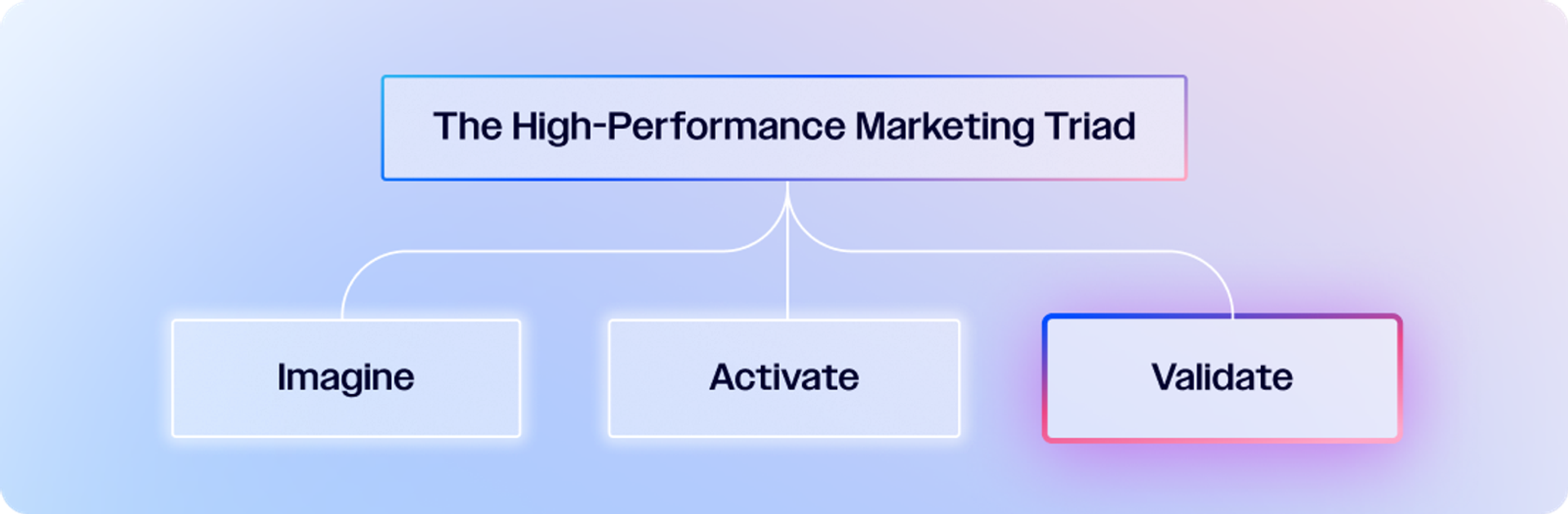
The validate phase is where AI functions less as a producer and more as a research partner — helping the team pressure-test assumptions and understand audiences before campaigns go out.
Audience and market research: Rather than making assumptions about a new client’s market, the team brings specific questions to AI first. “You can ask AI questions like: How do other businesses in this industry communicate? What kinds of drip campaigns did they do? What are some ideas for a lead magnet? What kinds of questions are my customers asking?” Jess says. It’s a faster starting point than a blank brief, and surfaces angles the team might not have considered.
Want the data behind the framework?
The imagine, activate, validate framework comes from ActiveCampaign’s original research into how high-performing marketers structure their AI workflows. 13 Hours Back Each Week breaks down where the time savings come from, which phases most marketers skip, and what separates the top performers from everyone else.
The result of the Don’t Panic Management team using AI for client work? A whole lot of time savings. While Jess doesn’t use AI for every work-related task, when she does, it saves serious time and energy.
“I would say AI saves me about 75% of the time I’d usually spend on a task. Like, if something was going to take me an hour of research without AI, it might take me 15 minutes using ChatGPT,” she shares.
That time savings is invaluable for marketers looking to delegate repetitive or tedious tasks to free up time and brain space for deeper work.
Looking forward, Jess thinks she’ll be able to tell clients that AI is actually maximizing the time and money they invest into DPM’s work.
“We’ll be able to say ‘you’re paying for five hours a week of our time, but you’re really getting more like seven or eight because we’re using the AI to support us in that five hours.’” Jess says they’re not quite there yet, but expects in the future to be able to tell clients they’re getting double the amount of time they’re paying for, thanks to AI.
Saving 75% of your time on research tasks?
That’s just the beginning. Subscribe to The Autonomous Marketer for more workflows, tools, and tactics that multiply your impact. Subscribe today.
Why the goal isn’t to work more, it’s to think more
Jess’s closing argument isn’t about optimism. It’s about a specific trap she wants marketers to avoid.
“My hope and dream for this era is that we find a way to work alongside AI, but that we don’t get stuck in a productivity trap,” she says. “More isn’t always more.”
The point isn’t to use AI to do more of the same work faster. It’s to use the time AI frees up to think more clearly, generate better ideas, and do the work that actually requires a human. That’s the version of autonomous marketing that compounds over time.
Resources to replicate Jess's workflows