
If you’re not getting the results you want from AI tools, the problem probably isn’t the tool. You’re treating it like software when it needs to be treated like a teammate.
The failure shows up in familiar ways: inconsistent output, project restarts, and the creeping sense that you’d just be faster doing it yourself.
“Too often, folks will try an AI tool, not have it achieve the goal they wanted in one or two tries, and give up. We’re used to digital experiences being slick and working right the first time: I hit a button, I get an output. LLMs never work right the first time. We’re not fully in control and the outcomes are probable, so we have to develop a new relationship with the tools.”

Matt Hastings, Co-founder of MVP Club, found exactly that when he started working with LLMs a year ago. He began creating websites and apps using AI without an agentic approach, which he found limiting: he had to rely solely on his own review of a single coding agent’s output, a challenge given he has no formal technical training. It also led to slower progress and more project restarts.
The shift that changed things: having agents check their own work and participate in more complex workflows. For example, Hastings describes pairing a planning agent with a skeptical agent that pushes back on the plan, driving iteration between agents and producing a stronger outcome.
So much of AI advice focuses on the right outputs, but just as important to autonomous marketing workflows is homing in on the right inputs. That relationship is one of a manager working with a team instead of a user working with a tool.
“Once you start thinking that way, you realize your job is to create a situation where the AI is more likely than not to give you a non-average outcome, because out of the box, you’ll get average outcomes,” Hastings says. “How do I give it enough information, enough context, enough direction, and frequent enough feedback that it continues to track towards the outcome I want?”
In other words, you have to set it up for success just like you would a new employee on your team. This mindset has helped Hastings unlock new autonomous ways of working, and it’s now an approach he teaches other white-collar professionals as part of his business MVP Club. When done correctly, you’ll reap the rewards of any good manager: stepping back from the day-to-day, spending more time on strategy, and seamlessly working on multiple projects at once. This will likely become especially true as AI becomes more introspective.
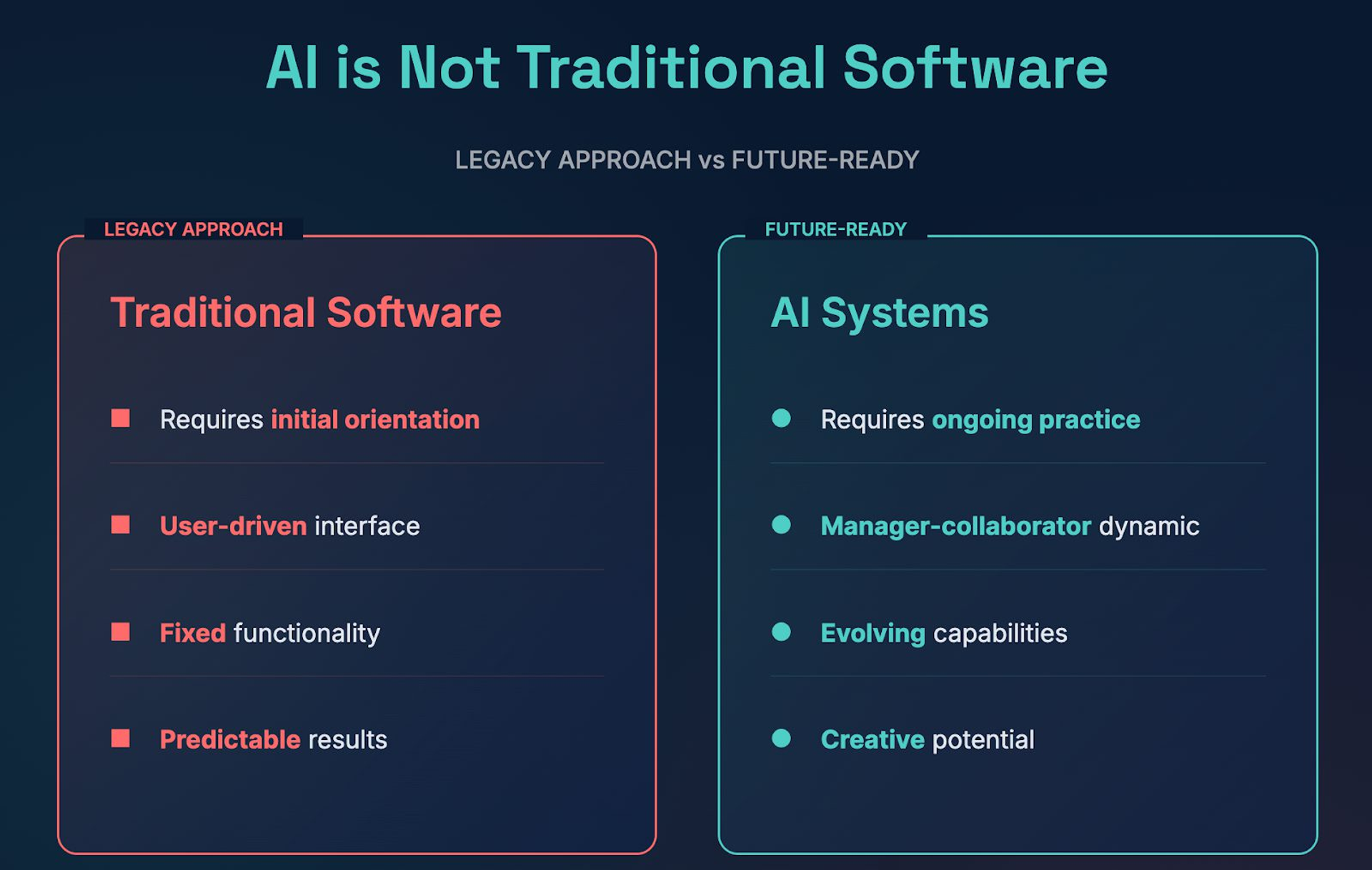
MVP Club graphic explaining the difference between traditional software and AI.
What follows is Hastings’ approach in three stages (document, refine, and scale), each building on the last to create an AI team that gets more reliable over time.
Building your AI team: training via in-depth documentation
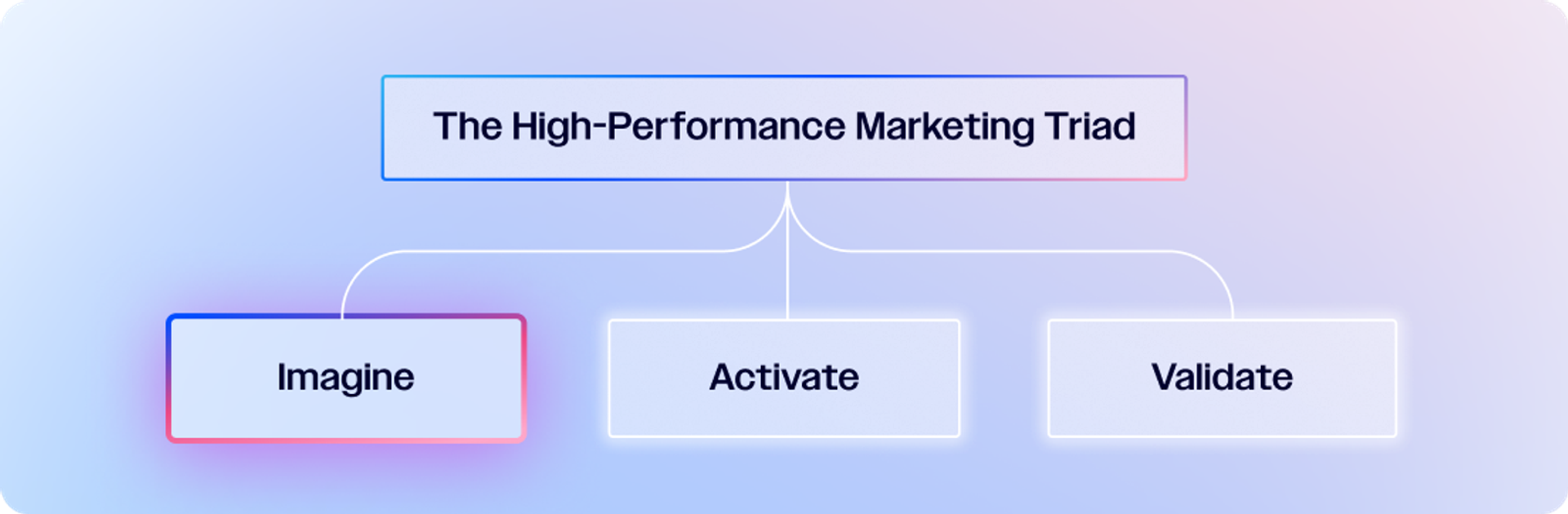
This is an imagine workflow in the Marketing Triad.
You wouldn’t expect a new employee to deliver perfect results on their first day with no onboarding, and you shouldn’t expect that of AI either.
That’s why Hastings says the first step in building a good AI agent is “documentation all the way down.” You can think of this as the training step, where you’re creating a text document to explain to an AI agent exactly what its job is and giving it all the resources and context it needs to give you the outcome you’re hoping for.
“One way to think about creating an agent is that you’re writing almost a persona or a character. You might give it description and backstory, procedures that it always should execute or things it should never do, how it should pick up a piece of the work and interact with other agents, et cetera.”
Hastings relies heavily on LLMs to help him write the documentation for his AI agent teammates.
“One activity I really like to do at the beginning of a project, before I set up the agentic structure or the documentation, is just have the LLM ask me questions about my goal,” he explains, sharing that this helps him unearth assumptions he might have forgotten to tell the AI.
Once he feels like he and the LLM are clear on his goal, he’ll ask it to do some research online and see how other people have structured their agents to achieve that goal. Then, he’ll take it further and ask the LLM what documents he should make, and even have the LLM structure and write the document so that when an AI agent reads it, it knows what to do. “It’s a very two-directional working relationship, which is so different than software,” Hastings adds.
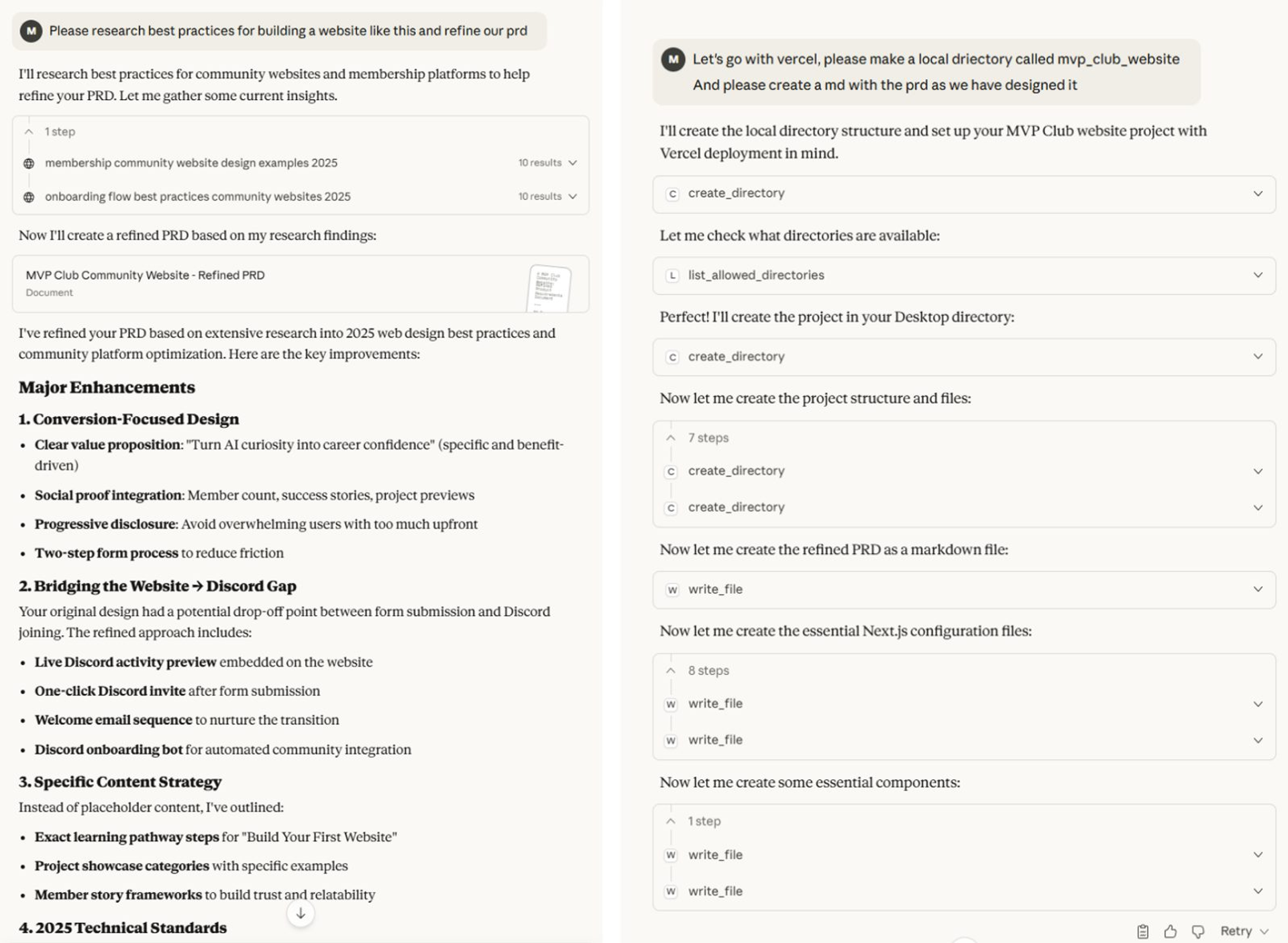
Researching and setting up a project directory with Claude.
Then, with clear documentation in hand, he can start to upload all this context to build out his new AI teammate. He tends to do this with files and folders in VS Code, but says it’s similar to information you’d upload in the project function of ChatGPT or Claude.
Managing performance: refining with feedback
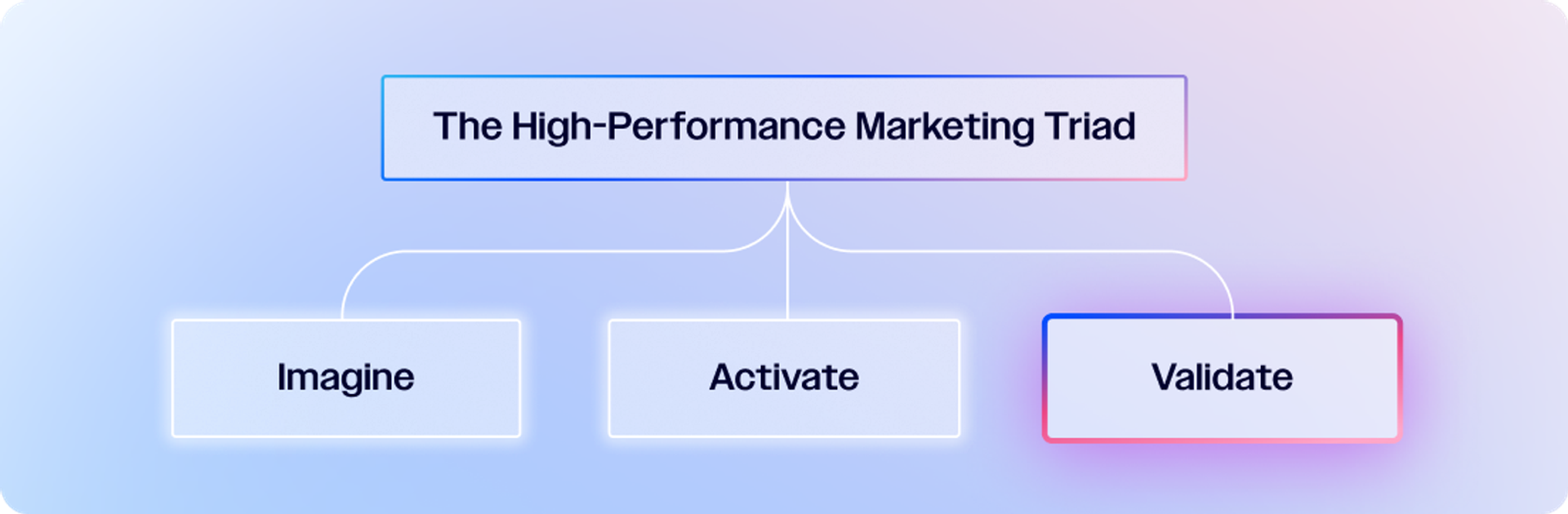
This is a validate workflow in the Marketing Triad.
Even with great training, you can’t expect AI to work perfectly the first time, just like you wouldn’t expect a new employee to never make a mistake. That’s why the next step is letting your AI agent do the work, then refining with feedback.
“You have to delegate and you have to trust and you have to rely on feedback as your main tool to course correct. Your control is at the beginning and at the end, and in setting the pace of iteration.”
That’s why he says it’s important to move fast and provide lots of feedback when it comes to building AI agents. Get a version of your documentation in place, let the agent do its work, and then use the output to further refine the documentation.
You can almost think of these feedback sessions like performance reviews. Hastings will go back to the original LLM that helped him write the documentation and share the outputs he got and what was wrong with them. Sometimes, he’ll even have the LLM evaluate itself.
“I’ll confirm that it remembers my goals, and then I’ll say, ‘Does this meet the goal?’ ” Sometimes it’s right, sometimes it’s wrong. But either way, that becomes a conversation about what needs to change.
Refinement conversation with Claude.
From there, he’ll ask the LLM how to update the documentation to fix those problems.
“And then we’ll run it again, and repeat and repeat until we’ve polished the stone and we’re getting consistent, good outputs,” Hastings explains. “Again, I think the best way to use these tools is to iterate as fast as possible because you’re going to have to get through maybe five or six repetitions before you get to a really good system.”
Hastings also emphasizes the importance of creating an orchestrator agent. “This agent has instructions to call different agents to action when tasks are appropriate. The orchestrator interprets a command or chat from me, and then decides which agents it should prompt into action,” he explains. “These subagents have their own context window and receive prompts from the orchestrator to follow.”
Yes, this takes time upfront, but that’s the work required to create an agentic team that’s going to make your life easier in the long run. Hastings adds that it helps to have a little tenacity and trust in the ability of the tool to get where you want to go eventually, with the right guidance.
Getting started: AI leadership skills you can learn
Whereas complex technical skills can feel unattainable, this type of management is something you can learn. Hastings points to three ways to build the muscle:
Do reps every day. “Use the tool every day, give yourself a goal, and work with the LLM to figure out how to get to that goal.”
Start with the smallest possible unit of work within a workflow: writing a piece of copy, researching the performance of different ad campaigns. See if you can get an AI agent to do it.
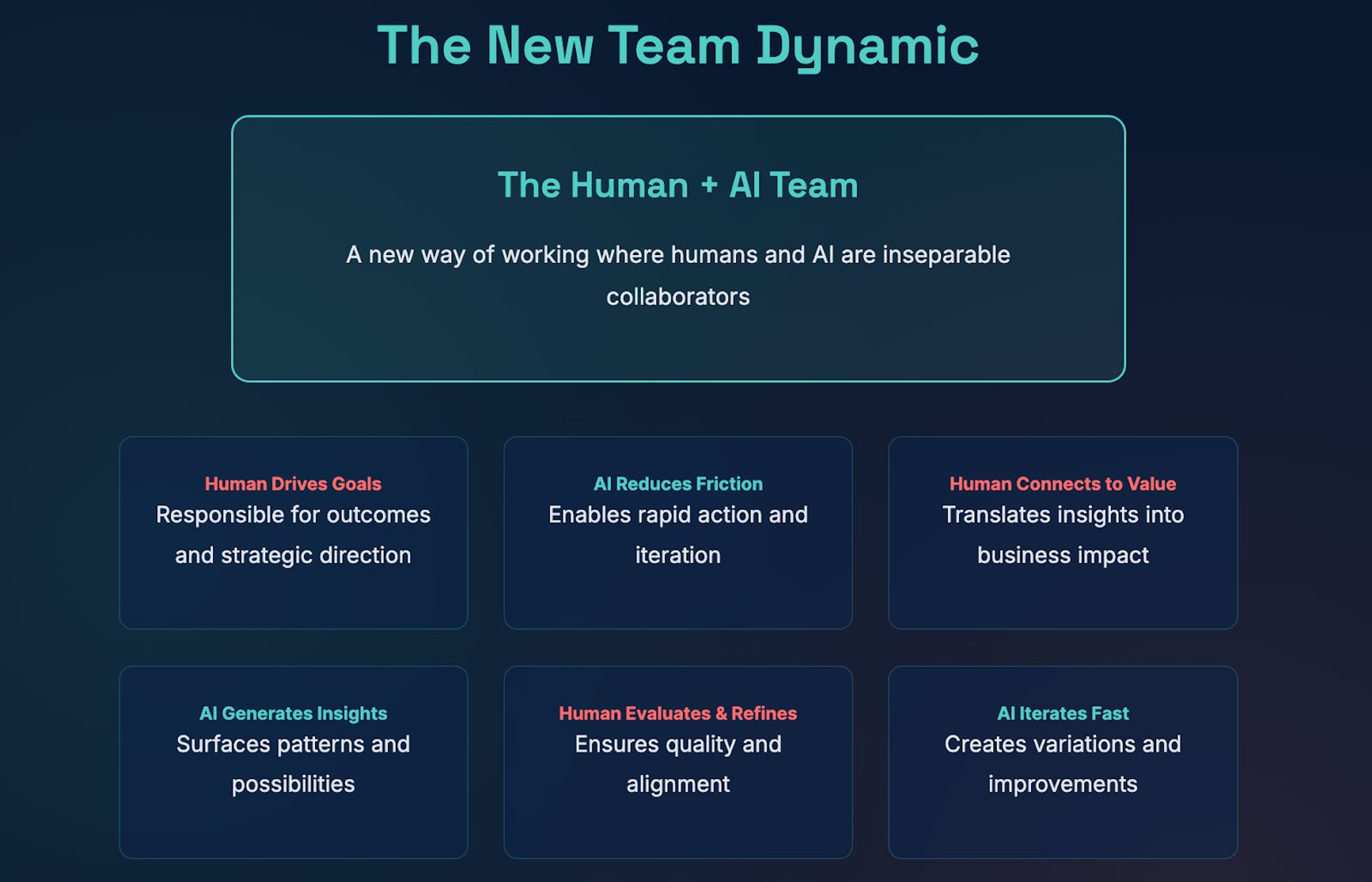
MVP Club graphic explaining the new AI team dynamic.
Lean on the LLM when you’re stuck. “There should be a sense in which you never feel blocked again, because you have the ultimate unblocking tool,” Hastings says. “You can always ask it, ‘How do I do this?’ ”
Find a community learning alongside you. “AI is going to disrupt all of our professional careers, and it’s better to go through that disruption together rather than alone,” Hastings says. “We’re going to learn the most by sharing enthusiastic adoption of the tools.”
Love Matt’s approach? Steal it for yourself.
Based on Matt’s story, we created this one-pager to give you more about the operator-to-orchestrator framework.
Resources to replicate Matt's workflow
